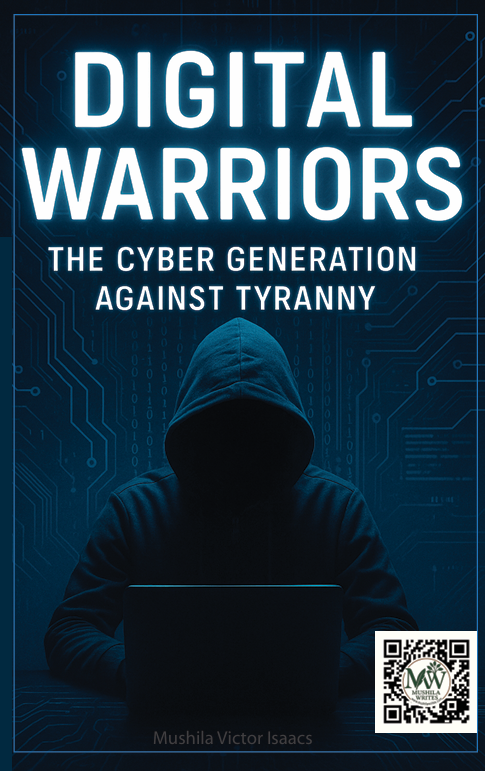
The internet was not supposed to be a prison. It was supposed to be the grandest liberation of the human mind—a digital commons where thought could leap across continents and ideas could dance, unchained, in the ether of human exchange. But in the twenty-first century, for millions, it has become something else: a watched corridor, a maze of mirrors, a series of locked doors behind which truth is beaten into silence. What was once imagined as a global village has been segmented into silos, where regimes fortify their narratives with firewalls, and dissidence is filtered, flagged, and punished with a flick of code or a knock on the door.
China, Iran, and Russia—among others—stand today not merely as nations but as architects of digital cages. Their borders are no longer just physical checkpoints patrolled by armed guards but virtual frontiers defended by algorithms, deep packet inspections, censorship bureaus, and the cold calculus of surveillance capitalism weaponized by the state. Behind these firewalls, entire populations navigate a curated reality. Search engines forget events that never happened according to the regime. Social media mirrors only the state’s will. News comes filtered like sand through clenched fists. What the eye doesn’t see, the heart is told not to grieve. But not all obey.
Some refuse to live with blinkers on their browsers. These are the VPN warriors, the anonymous few who forge tunnels beneath walls and whisper truth into blocked frequencies. They are university students in Tehran using foreign proxies to upload banned poetry. They are digital monks in Tibet bouncing prayers through Singaporean servers. They are coders in Novosibirsk who construct invisible doorways for journalists, fleeing the iron tongues of Kremlin-aligned laws. They are sons and daughters of the internet who refuse to let it become a tool of tyranny.
In China, the "Great Firewall" is not just a clever metaphor; it is a technological marvel of repression, a system designed to control over a billion minds through bandwidth. Every byte is scrutinized. Every keystroke is subject to analysis. Thousands of censors, both human and automated, work tirelessly to expunge any trace of dissent, humor, or mourning that might challenge the sacred image of the state. Events like Tiananmen are not merely forgotten—they are forbidden. Yet even in this labyrinth, people carve paths to breath. VPNs, though officially banned, are still sought after like contraband relics of an age of freedom. Teenagers buy access codes in back-alley forums. Scholars install encryption tools their parents dare not name. A digital underground thrives, evading detection through cunning, constantly updating protocols, and an instinctive hunger to see what lies beyond the algorithmic curtain.
In Iran, censorship is both ancient and new. The country’s theocratic regime has long sought to mold the moral and intellectual diet of its people. What began as bans on satellite dishes has evolved into one of the world’s most aggressive internet blacklists. Social media platforms like Twitter, Facebook, and YouTube are blocked. Access to international news is tightly monitored. During protests, authorities do not hesitate to flip the kill switch, plunging cities into information darkness to suffocate momentum. But if the regime knows how to censor, its youth have learned how to circumvent. At night, under blankets and with screens dimmed, Iranians use VPNs to post videos of police brutality, to access forbidden books, to read accounts of revolutions in other lands. TOR routers glow in the hands of young dissidents, each onion layer peeled back like layers of fear. What makes their struggle profound is not just their defiance but their hope—the belief that truth, once seen, cannot be unseen.
In Russia, the Kremlin's grip on the internet has tightened steadily, a python's constriction in slow motion. What was once a relatively open digital environment during the early 2000s has hardened into a near-totalitarian matrix. Laws passed under the guise of protecting children or fighting extremism are used to criminalize criticism. Blogs must register with the state. Journalists who post forbidden truths are summoned to court or vanish altogether. Roskomnadzor, the country’s communications watchdog, maintains an ever-growing list of banned websites, flushing out anything that could challenge the national narrative. But resistance here is not theoretical. It lives in flash drives passed hand to hand in train stations. It lives in teenagers using Lithuanian servers to expose corruption in the Duma. It lives in grandmothers learning to encrypt emails to their exiled grandchildren. Russians are learning that firewalls, no matter how fortified, cannot extinguish memory or mute the whispers of the soul. And they are learning to tunnel—not just through code, but through fear itself.
Yet for every new evasion tactic, the regimes respond in kind. China deploys deep packet inspection, a kind of X-ray for data, to detect and block VPN traffic. Iran builds its own “halal internet,” a national intranet cut off from the world. Russia threatens jail time for using “unauthorized” digital tools. They attack at both ends—technology and terror. But what they do not understand is that the digital generation, unlike any before it, is not rooted in one geography. It is transnational by default. It is multilingual, multicultural, and multi-platform. For every blocked port, a dozen open. For every imprisoned blogger, another ten rise in anonymous solidarity. The digital resistance has become a fluid organism, its nervous system pulsing through servers in Iceland, chatrooms in Ukraine, hashtags from Nairobi to New Delhi.
Virtual Private Networks, or VPNs, have become the cloaks of this resistance. They wrap data in encryption, disguise IP addresses, and make it possible for citizens to access banned content, share forbidden stories, and collaborate with the outside world. But VPNs are more than tools—they are metaphors. They represent not just a way to escape surveillance but a philosophy: that liberty must be coded into our connections, that the human spirit will not be firewalled without consequence. Proxy servers, too, are not mere rerouting mechanisms; they are lifelines, cables that tie together disparate souls yearning to speak, to organize, to mourn, to hope.
Across this invisible war, tactics evolve like bacteria in a petri dish. New-generation VPNs use obfuscation techniques to blend traffic with normal internet use. Tor networks mask users by bouncing their traffic through multiple nodes, often operated by volunteers who themselves risk reprisal. Encrypted messaging apps like Signal and Briar offer lifelines for protestors during blackouts. Browser extensions, DNS tunneling, steganography, mirror sites—every trick in the book is used, and rewritten. Innovation, in this context, is not academic—it is existential.
For those in the free world, it may be hard to imagine what it means to live in a country where typing a word, clicking a link, or sharing a photo could mean arrest or worse. It is difficult to grasp the emotional calculus of a dissident mother in Tehran who teaches her daughter to delete search histories before bed. Or the aching caution of a Russian father who won’t tell his son what really happened to their journalist neighbor. Or the longing in a Chinese grandmother’s voice as she whispers into a burner phone, hoping someone abroad can still hear. The internet, for them, is not entertainment. It is the last thread to the truth, to each other, and to the outside world.
But this chapter is not about victimhood. It is about resistance. It is about the sheer, stubborn resilience of those who refuse to bow. Who rewrite code with one hand while ducking digital patrols with the other. Who learn, teach, adapt, and organize in silence, knowing that every byte they transmit is a blow against tyranny. In classrooms and coffee shops, on prison walls and peer-to-peer networks, they build a world the regimes cannot reach—a borderless republic of truth.
This resistance is not perfect. VPNs can be compromised. Nodes can be surveilled. Some platforms are infiltrated by spies. Some data is lost, and some warriors are caught. But as long as there are minds that refuse to be molded, as long as there are eyes that want to see clearly, the battle continues. Every act of circumvention is an act of revolution. Every encrypted message is a manifesto. Every proxy is a passageway to a future where information flows not with permission, but with purpose.
And so, while authoritarian governments continue to erect digital fences, the cyber generation keeps building ladders. While they fortify their narratives, young rebels are opening windows. Where they tighten their grip, resistance moves like water—fluid, adaptive, unbroken. They cannot jail what they cannot catch. They cannot censor what refuses to die.
For the firewalls are only as strong as the silence they can enforce. And this generation is not silent. It is coded in resistance, rooted in truth, and encrypted with hope. A hope that even in the darkest server rooms of state surveillance, somewhere, someone is tunneling out—packet by packet, post by post, towards the light.