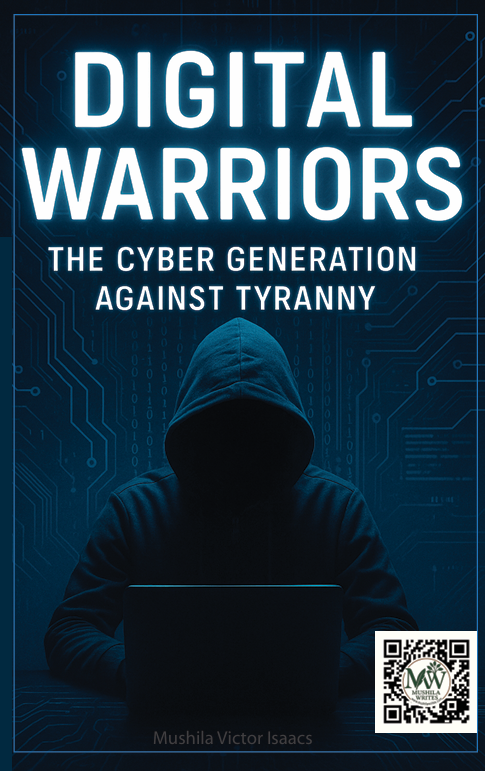
The world often forgets that history’s greatest upheavals rarely begin with thunder but with a whisper. One voice, muffled by the weight of power, chooses to speak—not in defiance, but in allegiance to truth. In the age of firewalls, proxies, and encrypted channels, this whisper travels across continents like a coded signal. It pierces steel doors, courtrooms, detention centers, and surveillance satellites. It becomes the voice of the whistleblower.
They don’t begin as martyrs. They are analysts, soldiers, system administrators, linguists, and contractors. They wake up, drink coffee, log into their machines, and stare into the matrix of classified realities that govern entire nations. Their work begins with obedience—to government, to security, to contracts written in ink and silence. But somewhere in the stillness of routine, they stumble upon a line of code, an intercepted message, a video feed, or an internal memo that refuses to fade into bureaucratic noise. It claws at their conscience. It lingers.
Edward Snowden was just twenty-nine when he downloaded troves of classified NSA documents that exposed the largest surveillance system ever constructed. He sat alone in a Hong Kong hotel room with encrypted hard drives and a knowledge that would change geopolitics forever. What pushed him wasn’t a desire for fame or destruction, but the erosion of privacy as a civil liberty. Through a simple USB stick and a moral reckoning, he became both a symbol of resistance and a fugitive of empire.
Snowden’s revelations, now archived and analyzed across universities and journalistic institutions, laid bare a truth long suspected but never proven: that governments, even democratic ones, often operate with Orwellian reach. Millions of Americans were being tracked without warrants. Allies were being surveilled. Journalists and activists were targeted. The Fourth Amendment—the constitutional firewall against unreasonable searches—was bleeding.
Far away in time and circumstance, but eerily parallel in courage, Chelsea Manning released thousands of military and diplomatic cables while serving as an intelligence analyst in Iraq. She was haunted by the footage of airstrikes in Baghdad, by the coldness of official language used to describe civilian deaths, by the normalization of war’s carnage. Her leak included the now infamous "Collateral Murder" video—a helicopter attack that killed two Reuters journalists and several civilians. Her conscience, she said, outweighed her loyalty to classification.
Manning was sentenced to thirty-five years in a military prison. She endured solitary confinement, suicide attempts, and a system determined to break her. Yet, her defiance remained intact. Her courage rekindled the discussion around transparency in warfare, the ethics of modern military occupation, and the erasure of civilian casualties from the record of empire. Though her sentence was commuted, the scars remain.
Julian Assange did not leak documents himself. He built the conduit. WikiLeaks was envisioned as a secure dropbox for whistleblowers—an underground press for the stateless truth. Through it, troves of data were published, implicating governments in war crimes, surveillance abuse, and corporate collusion. The publication of the Afghanistan and Iraq War Logs, and the Guantánamo Files, shook the foundations of diplomatic relations. But the U.S. government responded with a manhunt. Assange spent nearly seven years in the Ecuadorian Embassy in London, living in a room smaller than most cells, before being arrested. As of writing, he faces extradition to the United States, where he could face 175 years in prison.
Reality Winner, a former Air Force linguist, stumbled upon a report detailing Russian interference in the 2016 U.S. elections. Believing the American public deserved to know, she mailed it to a news outlet. The document was a single page, but it cut through the fog of political disinformation. For this act, she was charged under the Espionage Act and sentenced to over five years in prison—the longest ever for an American whistleblower who provided information to the press.
These names are etched into the silicon tablets of our time, but for every Snowden, Manning, or Winner, there are hundreds who never make the headlines. Contractors in Nairobi, data analysts in Mumbai, telecom engineers in Riyadh—quiet rebels who encrypt their truths and send them into the void, hoping their warnings will land in hands that care.
The digital age has made information both weapon and shield. Whistleblowers stand at the nexus of this tension. They are not perfect; they are flawed human beings with broken loyalties, personal traumas, and moments of regret. But what sets them apart is their moral threshold—the point at which silence becomes complicity. They cross a line, not for personal gain, but because the architecture of secrecy endangers lives, liberties, and democratic principles.
Governments argue that leaks compromise national security, put lives at risk, and embolden enemies. In some cases, these claims hold water. But they also serve to mask more sinister motives: the preservation of unchecked power, the evasion of accountability, and the maintenance of a status quo that profits from ignorance. The challenge then becomes not just the act of whistleblowing, but the act of listening.
To listen is to engage. It is to decrypt not only the documents leaked but the motives behind them. To evaluate the ethics of exposure in an age where secrecy and abuse often walk hand-in-hand. It is to ask why a nation would prosecute someone for revealing war crimes rather than for committing them.
The cost of truth is high. Exile, imprisonment, isolation, character assassination—these are not metaphors but lived realities. Snowden cannot return home without risking decades in prison. Manning endured psychological torment. Winner lost years of her life for a document the public had a right to see. Assange’s fate now hangs in legal purgatory. These are the wages of disclosure.
Yet, whistleblowers are not merely victims. They are architects of a more accountable future. Their documents have transformed journalism, informed policy reforms, and sparked movements. Their encrypted signals have birthed new technologies—secure messengers, leak platforms, blockchain journalism. Their voices have forced the world to reconsider what it means to protect freedom in the digital era.
In exile, they write memoirs, collaborate with human rights organizations, and teach the next generation of cyberactivists. They turn their isolation into blueprints. They do not vanish; they evolve. They become nodes in a global network of dissent, and their whispers echo through classrooms, legislatures, and encrypted chatrooms across the planet.
There is an ethical paradox embedded in their stories. In exposing lies, they break laws. In defending the public’s right to know, they violate oaths. But when justice and legality diverge, conscience must choose. Whistleblowers remind us that legality is not always morality, that transparency is not treason, and that silence is not neutrality.
The next whistleblower is already out there. Watching. Reading. Debating whether the truth is worth the price. They may be a systems analyst in São Paulo, a UN translator in Geneva, or a soldier stationed in the Sahel. They will question the narratives they are asked to uphold. They will test the limits of encryption. They will weigh fear against conviction.
When they act, the world will judge them through distorted lenses. Patriots or traitors. Criminals or heroes. But perhaps the most accurate title we can give them is necessary. They are necessary interruptions in the monologue of power. Necessary thorns in the side of institutional comfort. Necessary ghosts in the machine.
A living, breathing monument to those who sacrificed silence for the world’s right to know. In their exile, we find our way home to truth. Their whispers will not fade. They are signals sent not for applause, but for awakening. And in the vastness of cyberspace, even the smallest signal, if brave enough, can disrupt an empire.