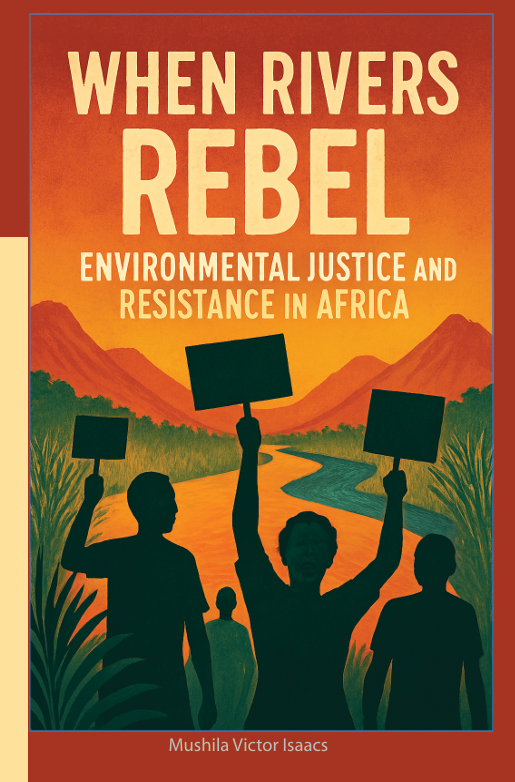
Entire Chapter 2 text goes here...
Diplomatic institutions have an especially important role to play in this transformation. International agreements addressing climate change and sustainable development should explicitly recognise postcolonial water justice and the unequal burdens carried by communities whose rivers have been exploited for centuries. Embassies, development agencies, and multilateral organisations should create permanent forums where African youth activists, indigenous leaders, scientists, artists, and community representatives participate not as symbolic guests but as equal architects of future environmental policy.
Continental institutions likewise face an historic responsibility. Africa's shared water frameworks must evolve beyond voluntary aspirations into stronger commitments that encourage cooperation, ecological restoration, and equitable governance across river basins. Rivers ignore colonial borders; therefore, policies protecting them must increasingly reflect ecological realities rather than inherited political divisions. Cooperation among neighbouring states should be measured not only through economic integration but also through the health of the waters they share.
Academic institutions are equally challenged by the demands of the river. Environmental scholarship can no longer rely exclusively upon imported theories while overlooking the sophisticated ecological knowledge preserved within African communities. Universities should embrace decolonial approaches that integrate indigenous hydrology, oral traditions, river cosmologies, customary water governance, and community-based environmental monitoring alongside contemporary scientific research. Knowledge grows strongest when multiple ways of knowing are allowed to flow together.
Collaborative publishing between universities and grassroots organisations should become the norm rather than the exception. Research findings ought to be translated into African languages, shared through community workshops, radio programmes, digital platforms, and schools, ensuring that knowledge returns to the communities from which much of it originates. Climate research should increasingly prioritise African leadership, African institutions, and African questions rather than treating the continent merely as a site of external investigation.
Environmental organisations must also examine their own practices critically. Conservation cannot be separated from questions of justice, land rights, cultural survival, and historical accountability. Too often, communities have experienced displacement in the name of protecting biodiversity, creating new forms of ecological injustice through so-called green development. Genuine restoration requires approaches that strengthen both ecosystems and the communities who have protected them across generations.
Watershed-based governance offers one practical path forward. Local communities should participate directly in protecting and managing the rivers upon which their livelihoods depend. Community-elected watershed councils can monitor pollution, restore wetlands, coordinate conservation activities, document indigenous ecological knowledge, and work alongside scientific institutions to strengthen basin-wide resilience. Such governance is no longer an unrealistic aspiration; it has become an ecological necessity.
African youth deserve central leadership within this transformation. Their creativity, technological innovation, artistic expression, environmental organising, and political imagination represent some of the continent's greatest strengths. Continental youth assemblies focused on river justice could produce declarations, artistic collaborations, scientific initiatives, legal proposals, and policy recommendations that challenge outdated systems while inspiring new generations to become guardians of Africa's waters.
The restoration funds advocated throughout this book should therefore flow directly toward communities protecting rivers rather than disappearing within distant administrative structures. Community-controlled trust funds can support wetland restoration, indigenous tree planting, water quality monitoring, ecological education, women's leadership programmes, youth innovation, sustainable livelihoods, and legal advocacy protecting rivers from destructive development. Restoration succeeds most effectively when local communities remain its primary decision-makers rather than its passive beneficiaries.