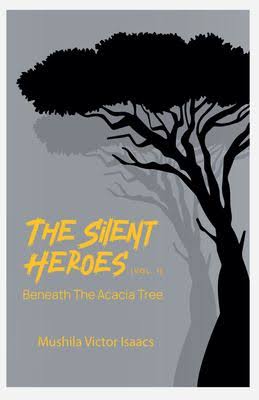
The Silent Heroes : Beneath the Acacia Tree
A Kenyan Historical Novel
Discover “The Silent Heroes Beneath the Acacia Tree” — a powerful Mau Mau–inspired tale of courage, resilience, and humanity set against Africa’s timeless landscapes.
Discover “The Silent Heroes Beneath the Acacia Tree” — a powerful Mau Mau–inspired tale of courage, resilience, and humanity set against Africa’s timeless landscapes.
The quiet days in Eden came to an abrupt end one sweltering afternoon when a line of strangers, led by a tall, stern-looking man on horseback, appeared at the edge of the village. Dust rose from the earth beneath their heavy boots, and their presence felt like an ill wind sweeping through the once-peaceful land. They wore hats with wide brims, their faces pale, and their eyes scanned the village with a mixture of curiosity and disdain. The rhythm of life in Eden—the calm predictability of mornings spent in the fields and evenings by the fire—was about to be disrupted in a way no one could have foreseen.
Jomo, like many of the other villagers, had never seen such men before. They carried strange weapons, long and sleek, slung over their shoulders, glinting ominously in the sunlight. The sight of them sent a shiver through the crowd that had gathered near the baobab tree. The elders stood at the front, their faces stern, but even from where Jomo stood, he could see the uncertainty in their eyes. Something about the strangers made his stomach churn, an unshakable feeling that they had come with more than just strange looks and odd tongues.
The leader of the group dismounted from his horse, his movements slow and deliberate, as if he had all the time in the world. He looked around, his gaze lingering on the people, the land, the trees, as though he already owned them. His cold blue eyes settled on Mzee Kimathi, the eldest of the village, whose wisdom and leadership had long guided Eden through good and difficult times alike.
Mzee Kimathi stepped forward, his staff in hand, and greeted the man in Kiswahili. But the stranger, who spoke in a clipped, unfamiliar tongue, didn’t respond. Instead, he motioned for another man, shorter and dark-skinned, who stepped forward and spoke haltingly in Kiswahili. His face was tense, his eyes avoiding those of the elders.
“My master comes in the name of the British Empire,” the translator said, his voice carrying over the silent crowd. “This land is now under the rule of the Queen of England.”
The words hung in the air, heavy and confusing. The villagers exchanged puzzled glances. Eden had always belonged to them, passed down through generations from their ancestors. How could it now belong to someone they had never seen, someone who lived across the sea?
Mzee Kimathi frowned, gripping his staff tightly. “This land has belonged to our people for centuries,” he said firmly. “It is the home of our ancestors. We have no need for new rulers.”
The translator’s expression remained unchanged as he relayed the elder’s words to the man on the horse. The foreign leader didn’t seem to care for Mzee Kimathi’s response. He barked something in his own language, and the translator turned back to the villagers.
“You will follow the laws of the British Crown,” the translator continued, his tone colder now, more final. “The land now belongs to the Empire, and all who live here must obey. Failure to comply will be met with punishment.”
A murmur rippled through the crowd. The elders exchanged anxious glances, and Jomo felt a surge of anger welling up inside him. Who were these people to come here, to their land, and make demands? His fists clenched as he watched the foreign men look down on his people as if they were nothing more than animals.
One of the soldiers stepped forward and thrust a piece of paper into Mzee Kimathi’s hands. The elder squinted at the strange writing, but none of them could read it. The paper was an official declaration, written in English, detailing the new colonial laws that now governed Eden and the surrounding villages. The message was clear: the land, the people, and everything in it was now under British control.
Jomo's mind raced. His father had once been a warrior, and though he had died long ago, Jomo often imagined what he might have done in a situation like this. Would he have stood up and fought? Would he have rallied the men of the village to resist these intruders? Or would he have found some way to negotiate with the strangers, to keep the peace? Jomo wasn’t sure. He had always been taught that the land was sacred, something to be cherished and protected. Now, it felt like it was slipping away, being stolen by these men with their pale faces and foreign tongues.
That night, the village was restless. Fires flickered outside the huts as the people gathered to discuss what had happened. Jomo sat close to his grandmother, Shosho, his heart still pounding with anger. The elders spoke in low voices, debating what to do. Some, like Mzee Kimathi, were adamant that they could not submit to these new rulers. Others were more hesitant, fearing the power of the strangers and their strange weapons.
“This land was given to us by the ancestors,” Mzee Kimathi said, his voice steady but filled with a righteous fury. “It is not theirs to take. We must stand our ground, even if it means fighting.”
“But how can we fight them?” another elder asked, his voice shaking with fear. “They have guns. We have only our spears and arrows. If we resist, they will destroy us.”
Jomo could feel the tension in the air. His own frustration mirrored the anger of the younger men in the village. He glanced at his friend Wekesa, who sat on the edge of the circle, his jaw clenched. They had grown up together, played together, dreamed together. Now, Wekesa’s eyes burned with the same fury that Jomo felt deep inside. The strangers had no right to claim their land, no right to disrupt the peace of Eden. But how could they fight back against an enemy so powerful?
The debate went on, but no clear decision was reached. Jomo listened in silence, his mind swirling with thoughts of the future. He thought of the stories his grandmother had told him—stories of resistance, of courage, of fighting for what was right. He thought of the warriors who had once defended this land, and of the ancestors who had walked these fields long before the white men had ever set foot here.
As the night wore on, Jomo slipped away from the fire and wandered to the edge of the village. There, beneath the stars, he felt the cool breeze on his face and heard the faint rustle of the acacia trees. He thought of his father, of the strength and bravery that had once defined him. He thought of the land, of the way it had always nurtured and provided for them. And he thought of the strangers, of their cold, unfeeling eyes, and the way they had looked at Eden as if it were theirs to take.
The shadows of the empire had fallen over Eden, darkening the once-bright future that the villagers had known. But beneath that darkness, Jomo felt a flicker of something else—something his ancestors had passed down to him through the land, through the stories, through the blood that flowed in his veins. It was the spark of resistance. He could feel it growing inside him, slowly but surely, like the first embers of a fire waiting to ignite.
He didn’t know when, or how, but one thing was certain: Eden would not submit without a fight. The empire had cast its shadow, but the flames of resistance were beginning to burn in the hearts of the people. And as the winds shifted, those flames would soon rise, threatening to engulf the darkness that had fallen over their land.
Jomo clenched his fists, feeling the strength of his ancestors in his bones. This was their land. And no matter what the strangers said or did, it would always belong to the people of Eden. The fight was coming. He could feel it in the air, in the earth beneath his feet, in the whispers of the wind that carried the voices of the past.
The shadows of the empire were vast and powerful, but even the darkest night could not last forever. Dawn would come, and when it did, Eden would rise again—stronger, wiser, and unbroken.
Purchase this book to unlock all published chapters, continue reading from where you stopped, and access the complete digital edition.
You have reached the end of the free preview for The Silent Heroes : Beneath the Acacia Tree .
Purchase this book to unlock: