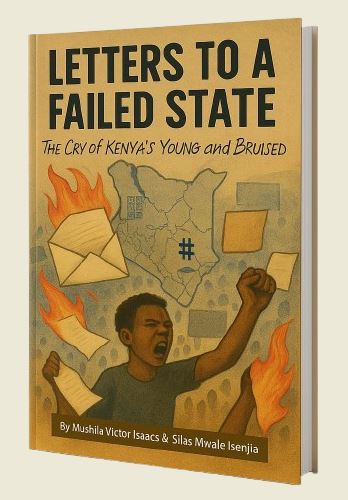
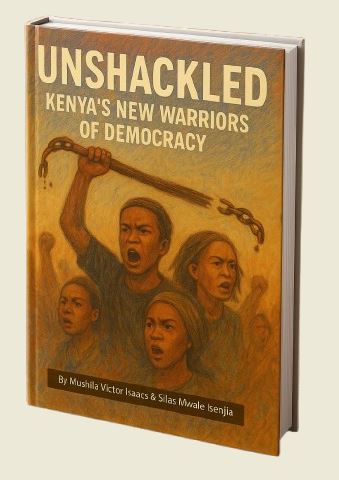
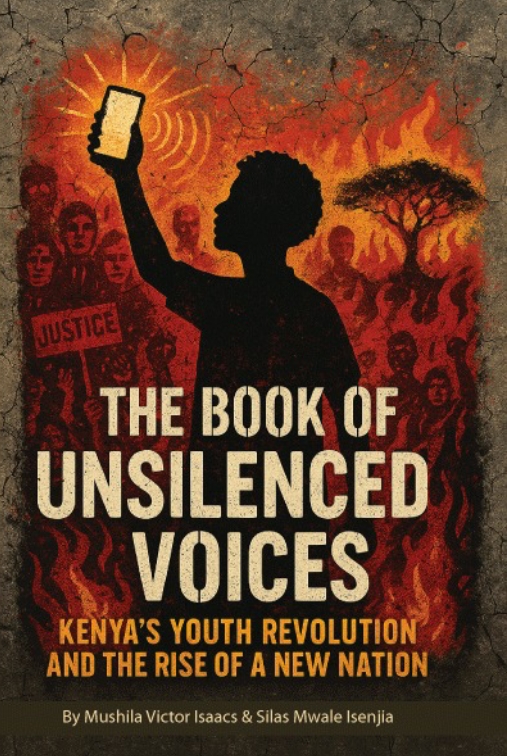
Dear Father of the Nation, We write not out of disrespect but out of disillusionment. We write not because we hate you, but because you taught us to speak the truth. You sang to us of justice and freedom, but now we find your songs hollow, your promises rotting in the gutters of your gated compounds. You marched barefoot for Uhuru, and we honour that. You bled in the forest, hid in caves, and fought the colonial master. You were Mau Mau, brave and unbowed. But somewhere along the road, you took the flag and planted it in your own backyard, not ours. You replaced the colonial whip with the polished cane of corruption. You built palaces on our poverty. You wore our dreams like robes and turned our votes into vaults. This is not a letter. It is a wound. We are the children of democracy. We were promised rain but handed dust. You stood on podiums and raised your fists, shouting "Haki yetu!"—our rights. But when you tasted power, you fed only your sons and daughters, leaving the rest of us scavenging from the national plate like stray dogs. You sent us to school, but gave us no jobs. You preached peace, but planted tribalism. You spoke of integrity, but your fingers were always deep in the nation's pocket. How can a child trust a father who sells their future? My name is Elphas, 23, from Mathare. I remember watching my father cry when the results of the 2022 elections came out. Not because his candidate lost, but because he had believed again. Believed in change. And then, within months, we saw the lies pile up like garbage at our doorsteps. Fuel prices skyrocketed. Unga became a luxury. School fees became the monster that haunted every kitchen. And then came the Finance Bill of 2024/2025—the final insult. We protested not because we were jobless, but because we were hopeless. There is a difference. Hopelessness is when you look at your country and realise it has no room for you. It's when you feel like a stranger in the land of your birth. It's when the National Anthem becomes just another song—tuneless and cruel. My brother Kevin was shot in the chest on Moi Avenue. He was 19. He had never held a weapon in his life. His only crime was raising a placard that read: Sio lazima tulipe kwa damu yetu!—It is not necessary for us to pay with our blood. They gunned him down like a stray dog. And no one was held responsible. No one ever is. The betrayal is not just by those in office today. It began long ago, with founding fathers who forgot that leadership was a service, not a throne. They spoke of Harambee—pulling together—but they pulled the rope while we carried the weight. They told us to believe in Kenya, but looted her like a carcass. We have grown up hearing about Vision 2030, Big 4 Agenda, Bottom-Up Economy—beautiful names with no breath in them. Dead slogans sewn into empty speeches. A friend of mine, Wambui, keeps a digital archive of all political promises made since 2002. We call it the "Museum of Lies." She is 21, a student of data science, and she weaves timelines that show the repetition of failure. It's always the same: new faces, same lies. She told me, "This country recycles betrayal like plastic." We grew up online. We learnt to question. We watched what happened in Sudan, in Tunisia, in Nigeria. We saw how regimes crumble when the youth find their voice. And so we turned to hashtags and encrypted apps. We formed WhatsApp groups that changed names every 3 hours. We used VPNs and burner phones. We learnt how to blur faces in videos and to map safe zones during protests. This was not just activism; it was digital warfare. We met in silence but spoke loudly. We created a new language—code words for police, symbols for danger, signals for evacuation. I remember one day we sent out a photo of a red shoe. It meant the police were approaching Jeevanjee Gardens. Within minutes, we had dispersed. We were shadows, but we had purpose. We were the children of disappointment, but we would not die silent. And yet, even in our resilience, we watched our leaders call us criminals. The President stood behind polished wood and spoke of "foreign-funded protests." He never asked why we were on the streets. He never saw the hunger in our eyes or the dust on our tongues. He never walked with us. Instead, he sent tear gas, water cannons, and bullets. The international community released statements—"We are monitoring the situation," they said. But we needed more than monitors; we needed mirrors. To the international community: You fund democracy programs, you support civil society, you hold summits on youth empowerment. But when the state kills its young, where are your voices? When blood soaks our flags, where is your outrage? Do black bodies need visas for empathy? We ask not for saviours but for solidarity. We ask that you name the violence, not just observe it. We ask that you hold our leaders to account not because of aid, but because of justice. You shake their hands while we bury our friends. You invite them to conferences while we nurse wounds inflicted by their greed. We are tired. A young man named Baraka wrote a letter before he died. He had been arrested and tortured. He wrote: "Nitaenda lakini msisahau, Kenya si yao peke yao."—I may go, but don’t forget, Kenya does not belong to them alone. We printed that on banners. His mother read it during his burial. Her voice shook, but she finished it. The crowd wept—not just for Baraka, but for a generation being erased. The betrayal is not just political. It is spiritual. We were taught to believe that our vote was sacred, that our leaders were chosen by God. But how can God bless theft? How can He anoint injustice? We see men who quote the Bible but ignore the beatitudes. We see churches turned into campaign halls. We see imams silenced with donations. Faith has become a mask. And yet, despite everything, we still believe. Not in you, but in us. We believe in the girl from Kibra who writes civic poetry. In the boy from Eldoret who built a protest app. In the mother from Kisii who hid wounded protestors in her shop. In the old man from Garissa who fed us when we were running from police. These are our leaders now. We no longer seek saviours. We are learning to save ourselves. But we will not forget. When the textbooks are written, let them include the names of the fallen. Let them say that in 2024, the youth stood tall. Let them speak of the betrayal of our fathers—not with bitterness, but with truth. For truth is the only seed that grows justice. We write this not to condemn, but to remember. We write to remind you that leadership is not inheritance. That loyalty is not silence. That patriotism is not submission. And that one day, even the tallest tree must bow to the wind. Tutavumilia mpaka lini?—How long must we endure? Not forever. Because we have learnt that courage is contagious. That history bends when youth stand. That fallen heroes never truly die; they become the songs we sing, the fire we carry, and the letters we write. This is our letter to you. From the children you betrayed. From the nation we still believe can rise. From the brave. From the disillusioned. From the unshackled.