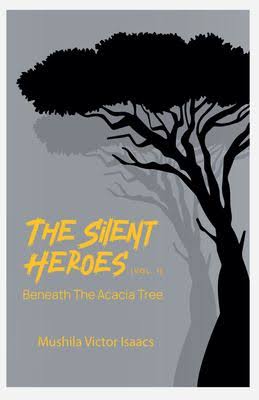
The Silent Heroes : Beneath the Acacia Tree
A Kenyan Historical Novel
Discover “The Silent Heroes Beneath the Acacia Tree” — a powerful Mau Mau–inspired tale of courage, resilience, and humanity set against Africa’s timeless landscapes.
Discover “The Silent Heroes Beneath the Acacia Tree” — a powerful Mau Mau–inspired tale of courage, resilience, and humanity set against Africa’s timeless landscapes.
The sun rose quietly over the hills, casting its golden light on the village of Eden. Nestled between vast fields of maize and patches of acacia trees, the village had stood for centuries, a place where the earth whispered ancient stories to those willing to listen. Here, life followed the rhythm of nature, guided by the seasons, the rains, and the wisdom of elders. The people of Eden were farmers, hunters, and gatherers, their hands calloused by years of working the soil, their hearts tied to the land that nourished them.
At the heart of the village stood the mighty baobab tree, its thick trunk and twisted branches reaching toward the sky like an elder offering prayer to the heavens. For generations, the baobab had been a silent witness to the laughter, the tears, and the struggles of Eden’s people. It was beneath this very tree that the council of elders gathered to discuss matters of importance—land disputes, marriage rites, and the telling of the old tales. To the people, the baobab was more than just a tree; it was a living symbol of their connection to the past, a reminder of the strength that came from knowing where one’s roots lay.
Jomo, a lanky boy of fifteen, sat beneath the tree, his back resting against its rough bark. He gazed out over the village, his mind wandering through the stories he had heard from his grandmother, Shosho, who had raised him after his parents died when he was young. She often spoke of the ancestors—warriors, healers, and farmers—who had walked these lands long before them. They had fought for their survival, faced droughts and floods, and had always emerged stronger. Shosho said that the blood of those ancestors flowed through Jomo's veins, and that one day, he too would face trials that would test his strength.
“You must remember, my grandson,” she would say, her voice soft but firm, “the land is not just dirt and stones. It is our lifeblood. It holds the stories of those who came before us. If you listen closely, it will guide you.”
Jomo felt the weight of her words, though he didn’t fully understand them yet. Life in Eden was simple—wake up with the sun, tend to the animals, help in the fields, and gather at dusk around the fire to hear the day's news. But recently, there had been whispers of change, carried on the wind like the dry dust before a storm. Strangers had begun appearing in the nearby towns, men with pale skin and strange tongues. They wore stiff clothing and carried with them weapons that glinted in the sunlight. The elders spoke of them with hushed voices, their eyes clouded with worry.
“They come from far across the seas,” Shosho had told him one evening as they sat by the fire. “They claim to bring progress, but their progress is like the fire—it burns everything in its path.”
Jomo didn’t know what to make of these stories. The men had not yet come to Eden, and for now, the village remained untouched by their presence. But the air was thick with uncertainty, and Jomo could feel it. His friends, too, had begun talking in low voices, wondering what these strange men wanted and why they were here. Some said they came to trade, others whispered of land being taken, and still, others feared that the old ways would be lost forever.
Eden was a place where traditions were deeply rooted. The people lived in harmony with the land, understanding its rhythms and respecting its power. Every year, they held festivals to honor the changing seasons, to give thanks for the harvest, and to ask for the rains that would nourish their crops. The dances, songs, and stories passed down through generations kept the village's history alive, binding the people to their past and each other. It was a way of life that had endured for centuries.
Jomo’s father had once been a warrior, respected for his strength and his loyalty to the village. Though he had passed many years ago, Jomo often wondered what he would have done in these times. Would he have fought to protect their land, or would he have sought peace with the newcomers? The boy felt the pull of his ancestors more strongly now, as if they were calling to him, urging him to be ready for the unknown.
As the sun dipped lower in the sky, casting long shadows across the village, Jomo stood up and dusted off his hands. He looked once more at the baobab tree, its silhouette now a dark figure against the fading light. He knew that life was changing, even if he didn’t understand how. The land beneath his feet, once a source of comfort and familiarity, now felt like a place on the edge of something new—something dangerous.
The whispers of change grew louder with each passing day. People from neighboring villages brought tales of the strange men who had settled near the coast. They spoke of land being seized and villages displaced, of strange laws being imposed and the once peaceful lives of farmers and herders disrupted. Some of the villagers were frightened, while others, like Jomo’s uncle Mzee Kenga, believed that these were just passing storms, and that Eden, protected by the mountains and forests, would remain untouched.
But Jomo felt a sense of foreboding. He couldn’t shake the feeling that the winds of change would soon reach their village. He spent more time with Shosho, listening to her stories, hoping to draw strength from the past. She told him of the great warrior chiefs who had defended their lands from invaders, of the wisdom of the healers who knew the secrets of the earth, and of the spirit of the ancestors who watched over them all.
“There is power in the land,” Shosho said one evening as they sat outside their hut, watching the stars appear one by one in the sky. “It remembers those who have walked it, those who have bled for it. It will remember you too, Jomo. You are not alone in this world. Your ancestors walk with you.”
But even as Jomo tried to find comfort in her words, he couldn’t ignore the reality that was unfolding around him. One evening, as he returned from the fields, he noticed a group of men gathered at the edge of the village, talking in hushed tones. Among them was Mzee Kenga, his face grim.
“What’s going on?” Jomo asked as he approached.
Mzee Kenga looked at him, his expression unreadable. “Strangers have been seen near the river. They are not like the traders we’ve seen before. They carry weapons, and they speak of a new kind of rule.”
Jomo’s heart sank. The stories he had heard were no longer just rumors. The strangers had arrived, and with them, the shadow of an uncertain future.
That night, as the village gathered around the fire, the elders spoke of the need to remain calm, to continue with their lives as they always had. But there was a tension in the air that no one could deny. The once peaceful village of Eden now felt like a place on the edge of something far greater than any of them could have imagined.
Jomo lay awake that night, staring at the thatched roof of his hut, his mind racing with thoughts of the future. He thought of his ancestors, of the warriors who had fought to protect their land, of the farmers who had worked the soil for generations, and of the healers who had understood the mysteries of the earth. He thought of Shosho’s words, of the power of the land, and of the stories it held.
He knew that his life, and the lives of everyone in Eden, were about to change. The strangers had brought with them the promise of something new, but with it came uncertainty and fear. And yet, deep within him, Jomo felt a growing determination. He didn’t know what the future held, but he knew that he would face it with the strength of his ancestors behind him.
The village of Eden had stood for centuries, its people rooted in the land, their lives shaped by the rhythms of nature. But now, the winds of change were blowing, carrying with them the shadows of an empire that would soon shake the very foundations of their world.
As the first light of dawn broke over the hills, Jomo rose from his bed and stepped outside. The air was cool, and the village was quiet. He looked out over the fields, the acacia trees standing tall against the horizon, and the mighty baobab tree, its branches reaching toward the sky.
In that moment, he felt the weight of the past and the uncertainty of the future. But he also felt something else—a spark of hope, a belief that no matter what lay ahead, the roots of the land would hold strong.
And so, with the rising sun, Jomo made a silent promise to himself and to the ancestors who had come before him. Whatever the future brought, he would stand tall, like the baobab, rooted in the land of his birth, ready to face whatever trials lay ahead.
Purchase this book to unlock all published chapters, continue reading from where you stopped, and access the complete digital edition.
You have reached the end of the free preview for The Silent Heroes : Beneath the Acacia Tree .
Purchase this book to unlock: